Economic violence is one of the least talked about forms of abuse, and one of the most common. At the Alliance for Gender Equality in Europe, we recently spoke with two grantee partners who work on it every day. They talked about how control over money shapes women’s lives, how to break the silence, and what keeps them going in challenging contexts. The conversation has been shortened and slightly edited for readability. We thank them for sharing their time and knowledge with us.
Camelia Proca is the founder and director of the Association for Liberty and Gender Equality – A.L.E.G., which has been active in Romania and Eastern Europe since 2004 in the area of gender equality, prevention of gender-based violence and support for survivors.
Dorottya Szalay is the Strategic Lead of NANE Association, Hungary’s longest-standing women’s rights organisation, focused on combatting violence against women and girls through prevention, trauma-informed service provision, advocacy, institutional development, and knowledge exchange.
How does the issue of economic violence look like in your context?
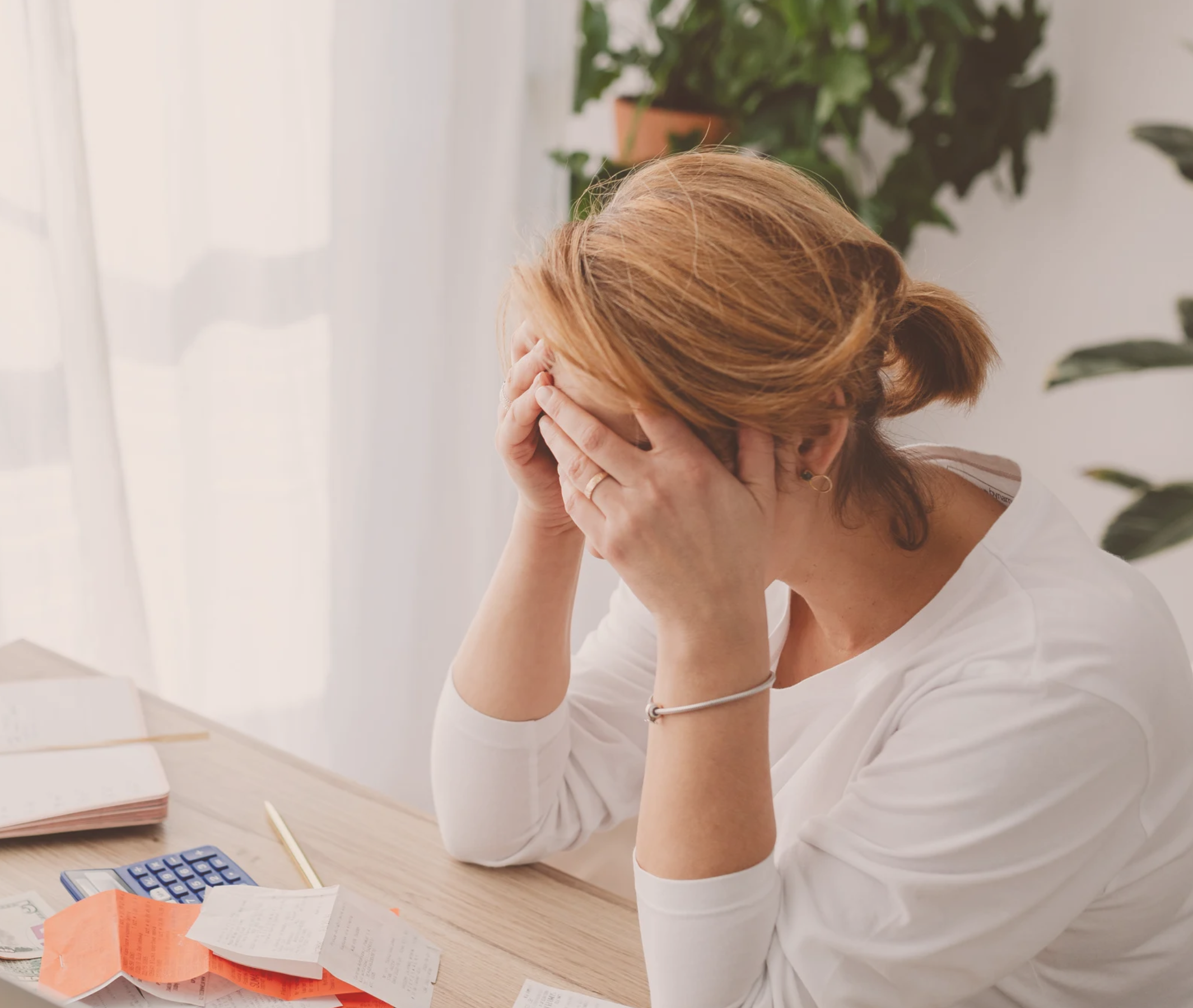
Camelia: I would say economic violence is normalised in Romania. A 2023 gender-based violence barometer showed that one in four respondents consider it acceptable if a man doesn’t allow his partner to use money as she wishes. We see it daily in our counselling centre. We often have situations where the woman has a job and an income, but her partner is the one making all the decisions about the family’s expenses, and she would have to ask his permission to pay for anything.
It’s also one of the obstacles to escaping violence. Many women stay in abusive relationships for fear they wouldn’t be able to manage on their own, and that mindset, which is connected to gender stereotypes, is unfortunately internalised by women too. That’s why our counselling sometimes begins with budgeting skills so that women can see that they could manage their money if they weren’t under such pressure from the abusive partner. Very often it is the partner who makes it harder to make ends meet.
We have had women who, after separating or even divorcing, continue to pay a bank loan taken in their name but under his control. In some cases, it is impossible to get rid of these loans, and that makes it more difficult to achieve independence and start a new life.
This form of abuse is rarely talked about, and that is one of the problems. We need to break this silence.
Dorottya: Our experiences are very similar. I would start with the invisibility of economic abuse. It is often understood as simply taking a woman’s money, but in reality, it can be much more subtle. It means interfering with employment, controlling time, restricting access to resources. Each incident can look ordinary at first, but it is the pattern, its strategic nature and its cumulative effect on a woman’s options that reveals the abuse.
I also want to mention institutional betrayal. The institutions that women turn to for help are not neutral spaces. A woman may be blamed for staying, questioned about why she did not leave earlier, or expected to prove that she is a “credible” victim. Her financial difficulties may be treated as evidence of irresponsibility rather than as consequences of abuse. Her unpaid care work is taken for granted. And women facing racism, poverty, disability or migration-related barriers meet even more disbelief and exclusion.
How do we make this invisible form of violence more visible? How do we break the silence?
Dorottya: When we talk about change, it’s important to recognise that it can seem small from the outside but be a profound shift in someone’s life, just as institutional change can transform how support is provided. We have been fortunate to contribute to both, and to see how they reinforce one another.
In one isolated community, we ran a violence prevention programme. A young girl took part in a session and later sat down with her mother to talk about traditions in the community that shape women’s economic independence. Something that had been taken for granted for generations, treated as simply the way things are, became something that could be questioned and discussed between a mother and a daughter.
There’s also been a shift in how violence itself can be talked about in marginalised communities. Talking openly about domestic violence can be difficult. But talking about work, money, housing, debt and education offers a different entry point. People can recognise and discuss these tangible things even if they don’t perceive their own experience as violence. It gave communities and professionals a language for patterns of control that might have remained unnamed.
Camelia: Very much so. People need an entry point that is more tangible and practical, not necessarily under the label of domestic violence, because women don’t always recognise the signs, and sometimes they are not ready to identify as victims.
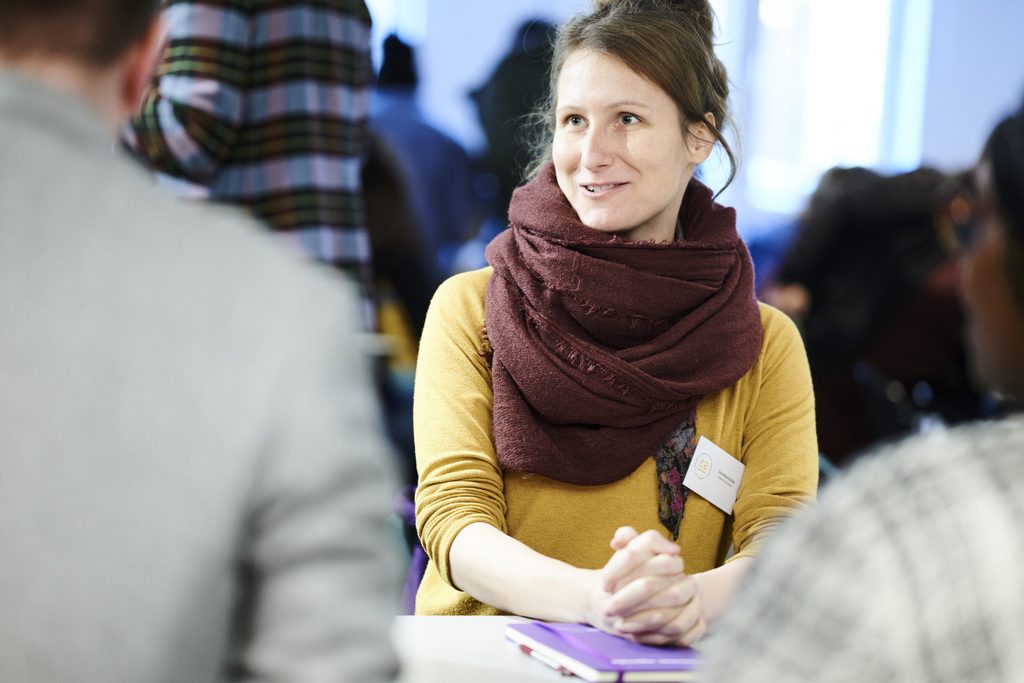
So how do you break that silence? We found peer communities to be the best way. Women share experiences in a way that isn’t patronising, and they have fewer defences against it.
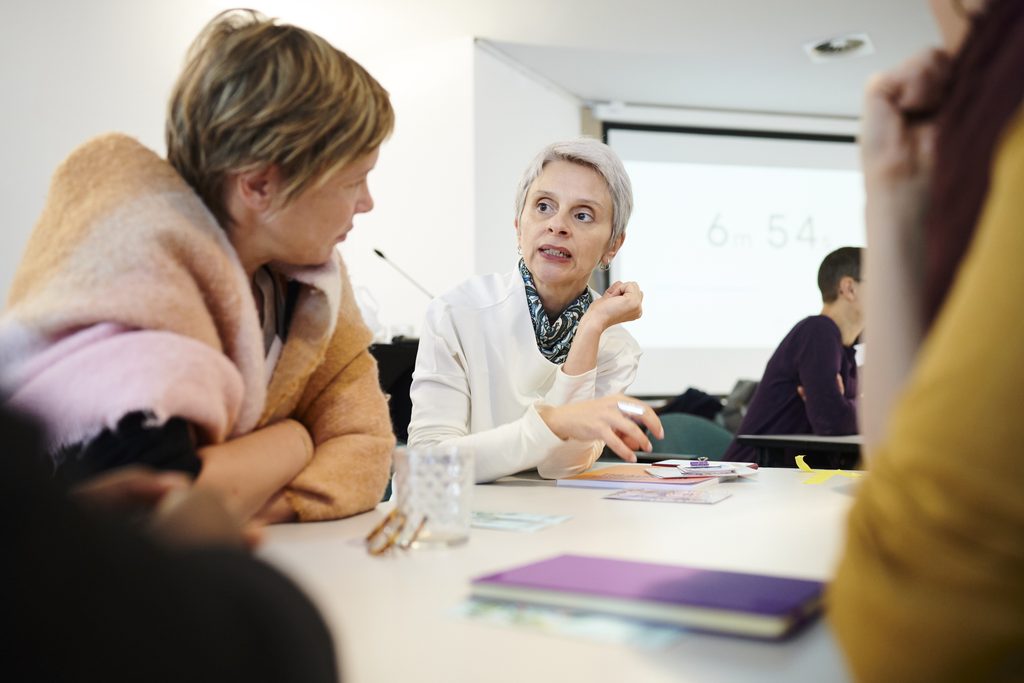
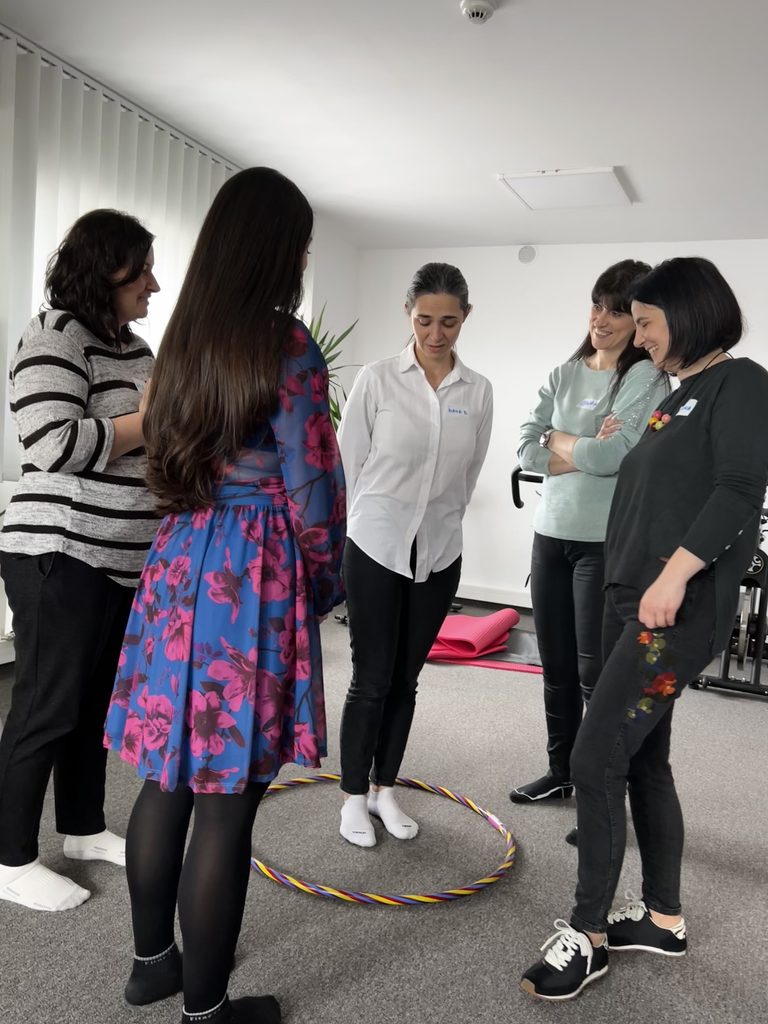
Since 2018, we have been building communities where women who have gone through abusive relationships can share their stories. We offer possibilities to interact in online groups but also in person. It is very empowering to be in a circle of women and to hear that other women have been through the same thing and how they coped.
Is there something you are particularly proud of?
Dorottya: We are also proud of our co-educational prevention work. We have been working with girls and boys separately and together, and it has been wonderful to see them start to plan futures together, talking about what could be instead of what is.
Camelia: What we are very proud of is that some of the survivors started their own initiatives. One survivor created a theatre play based on the stories of women she met through our support groups, another one an information channel.
This year, with the help of the Alliance grant, we were able to organise the 5th edition of the Survivors’ Forum, and it ended with a Survivors’ Manifesto we distributed to decision-makers. Some of the points are about economic control and how it is made invisible in society, with concrete action points for courts, judges and authorities who should be addressing this form of violence more actively.
What makes this work hard? What stands in your way?
Camelia: One of the biggest challenges for women’s rights NGOs in Romania is that we sometimes get applause from state authorities, but rarely any co-financing. And unfortunately, even the applause is now dwindling in Eastern Europe. Gender equality work is becoming less and less recognised.
Besides helping women overcome violence, a big part of our time goes into making sure our services can continue year on year. I call it ‘puzzle solving’. Our resources are made up of small pieces of different projects, starting and ending at different times, with different rules and reporting requirements. It takes a toll to be constantly monitoring when one project ends and whether another is in place. It brings us closer to burnout every year.
Dorottya: We share the puzzle-solving funding issue, definitely. Also, funders often want something new instead of maintaining the infrastructure that exists.
Given the amazing work your organisations are doing and the context in which you are operating becoming increasingly difficult, what keeps you going? What has sustained you?
Camelia: I think it is the small, daily successes: a survivor who has overcome her fears and is stepping into her power or doing something together with other women. And although gender equality has become a bad word in Romania, young people are still signing up to volunteer. That gives us hope. That confirms we are doing the right work, even though it’s very hard.
On a more practical note, multi-year core funding is what keeps us going, and I’m very grateful for it. The Alliance is a great example. This flexibility and these trust-based relationships matter, instead of being stuck in a bureaucratic project approach, limited in time and scope. We are building social impact, and you need years to see real change.
Dorottya: I can completely relate to the small wins. We draw strength from the trust and resilience of the women we work with, and from partner organisations, institutions and even municipalities. An example is the UK charity Surviving Economic Abuse. I was lucky to meet them in person, and they gave us so many ideas, knowledge and hope. Solidarity from the Hungarian civil society made a real difference as well. It reminded us we were not facing these pressures alone.
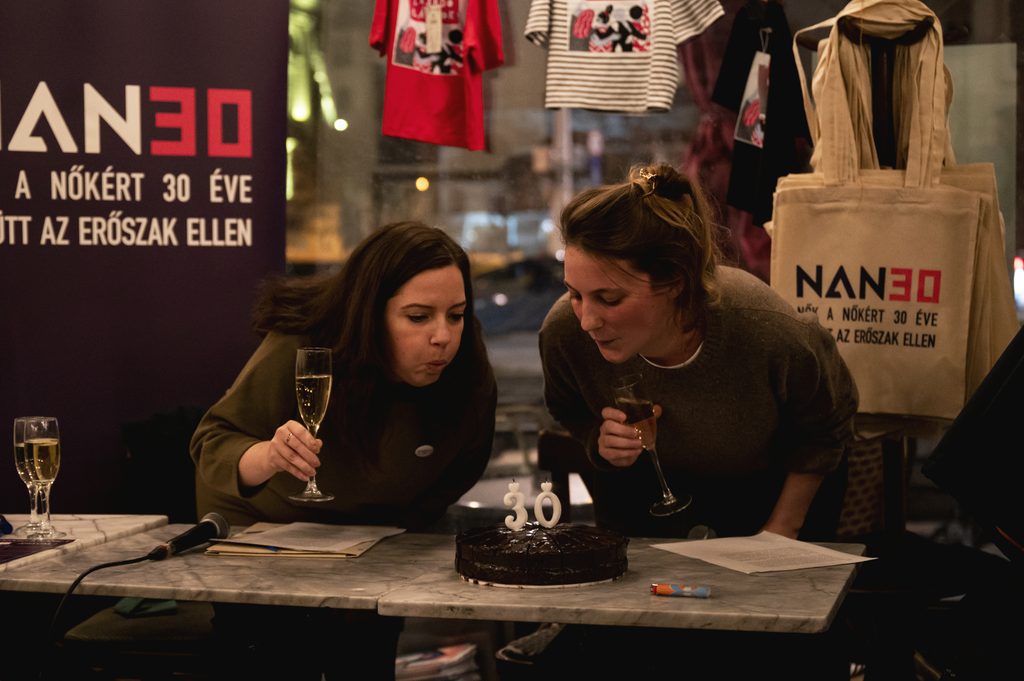
And then there is our own community. We have a very diverse team, with the energy and enthusiasm of younger colleagues alongside the persistence and determination of women who have been doing this work for decades. Despite everything, we can still laugh together. We haven’t lost our sense of humour.
Besides that, I also want to mention the Alliance. It was a unique experience for us. The team actively followed the political and social changes in Hungary and kept up a meaningful dialogue with us throughout. Without exaggeration, it felt like a genuine partnership. They also supported our organisational development, which was particularly important, and we are glad to see this approach spreading.