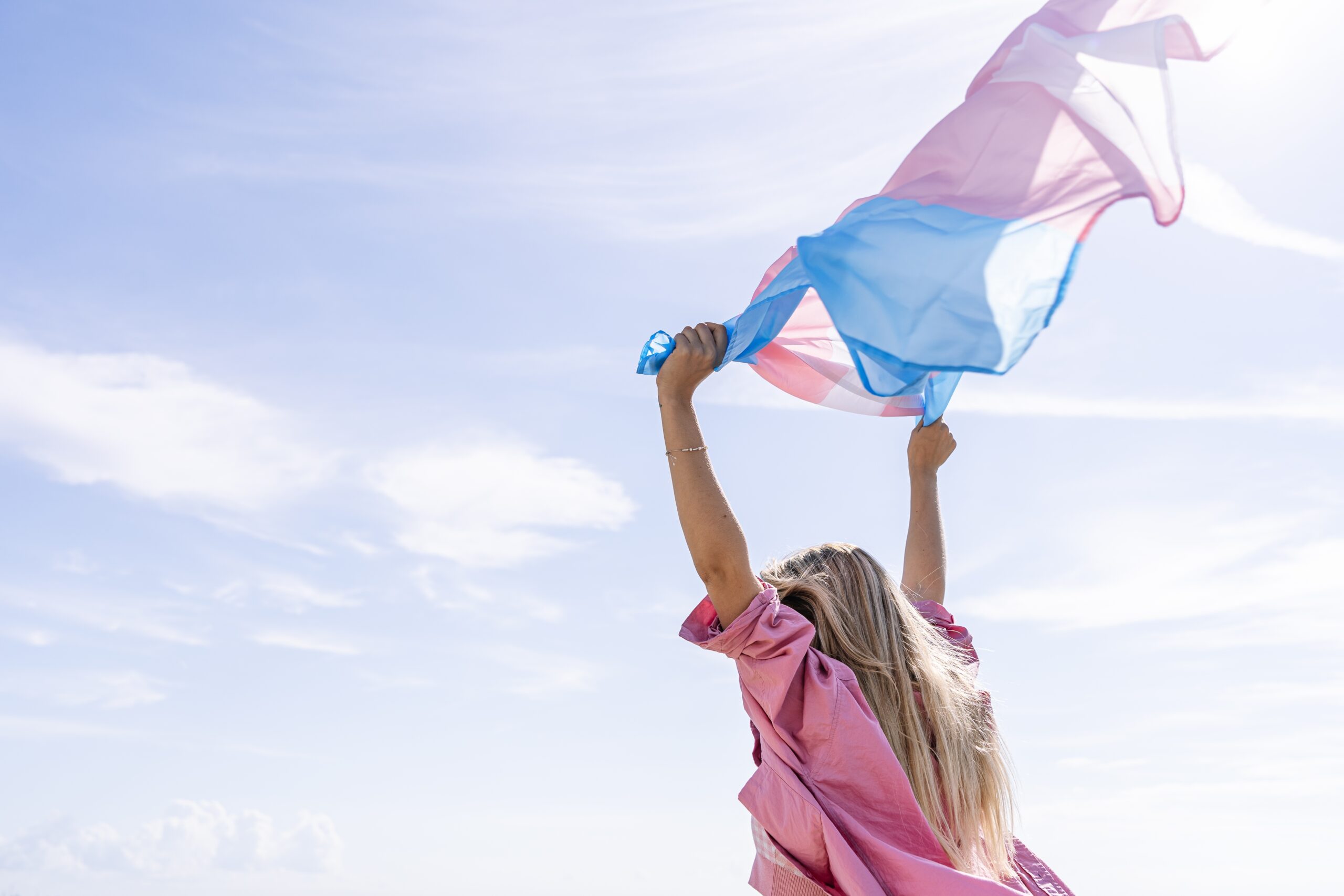
In March, the EU’s highest court ruled that all member states must legally recognise the lived gender of their nationals who have exercised their right to move freely and live abroad within the EU.
The outcome in what is known as the Shipova case is a glimmer of hope amid declining rights for transgender people across Europe, and shows what is possible when people, activists, and organisations work together to achieve big wins. Together, Bilitis, Deystvie, ILGA-Europe, and TGEU – Trans Europe and Central Asia supported the applicant and her lawyers throughout the case, helping to bring about change that will enable thousands to live and move freely as themselves.
This ruling is the result of years of dedicated work by our Bulgarian partner Bilitis, which is supported by the Alliance’s Economic Opportunities Fund. Bilitis is a self-led group of lesbians, bisexual women, trans, and intersex people. It works to empower the LGBTI community in Bulgaria and create a safer, more welcoming environment for everyone.
Why this ruling matters
This decision comes at a crucial moment. The 2025 Trans Rights Index recorded a significant decline in the rights of transgender people in Europe and Central Asia for the first time in thirteen years.
In some countries, anti-trans laws, violence, and intolerance are being actively fuelled by political and media figures. They use anti-gender rhetoric to position transgender people as scapegoats for broader societal problems, spreading misinformation and ‘us versus them’ narratives.
Such stigmatising discourse has a devastating impact on the mental health, safety, and opportunities of trans people. According to the EU Agency for Fundamental Rights:
- Nearly two out of three transgender people experienced discrimination related to their gender identity in 2023, including in the workplace;
- 69% were victims of hate-motivated harassment in the past twelve months, compared to 47% in 2019;
- Nearly one in three transgender women and one in four transgender men experienced physical or sexual violence in the past five years;
- Almost six out of ten transgender people considered suicide in the year preceding the survey.
“Life in Bulgaria is tough – I’ve been assaulted, harassed, threatened with violence a myriad of times, have been sexually abused and beaten, and I’ve been subject to transphobia and intersex-phobia too many times to count,” a 20-year-old Bulgarian testified in the report.
The Shipova case
The case was brought by a Bulgarian trans woman who underwent a gender transition after moving to Italy. Her request to correct the gender and name on her documents was rejected by Bulgarian authorities and courts for nearly a decade.
Without identity documents corresponding to her lived gender, she couldn’t move freely within the EU and faced discrimination in all areas of life where official documents are required. This included going to the doctor, securing housing, finding a job, and receiving social benefits.
The case eventually made its way to the Court of Justice of the European Union, which ruled that refusing to legally recognise someone’s gender restricts their right to move and reside freely anywhere in the EU, and that Bulgaria’s current law is against EU law.
The judgment is expected to have far-reaching implications for trans people in Europe. Member states must now offer an effective, quick, and transparent process for gender recognition for anyone who moves across borders to study, work, or build a life elsewhere in the EU.
“For years, trans people in Bulgaria have had no real possibility to obtain documents reflecting their identity, creating constant barriers in everyday life. [The] judgment is an important step toward restoring dignity and legal certainty, and Bulgaria must now bring its laws and practices into line with EU law,” says Adi Petrov, Policy and Advocacy Officer at the Bilitis Foundation.
The work that still lies ahead
Although the ruling is a milestone, it is not the finish line.
“Although the decision is key, it does not completely solve the problem, because in Bulgaria there is still no clear and accessible procedure for legal gender recognition for all trans people. The goal remains a clear and accessible procedure for legal gender recognition for all trans people in Bulgaria, including those who live here,” explains Adi Petrov.
Yet, in a major step forward, Bulgaria’s Supreme Court has since ruled in favour of four trans people seeking legal recognition of their gender identity, bringing it in line with the Shipova ruling.
Legal victories do not happen in a vacuum. Both cases are a reminder that court decisions can pave the way for progress, but without local grassroots organisations – supporting those affected, documenting violations, providing legal expertise, and championing human rights – such legal advances would remain impossible.
Gender equality is not achieved in a single day or in a single decision, but through initiatives and people who work for it every day.
Although Bulgaria remains at the bottom of the ILGA-Europe’s Rainbow Map, ranking 40 out of 49 in 2026, seeds of change are starting to sprout. Trans people are increasingly visible in public spaces, at work, in institutions and public debates. Public opinion on LGBTI issues has also become more favourable, especially among younger, more educated segments of the country.
This kind of change does not happen without organisations like Bilitis, whose impact reaches well beyond the courtroom. As Bulgaria’s oldest active LGBTI organisation, Bilitis also provides psychosocial support, runs support groups and safe spaces, organises public awareness campaigns, assists trans and non-binary individual to find jobs, produces critical research, and continues to advocate for justice and equality for all.
“The growing visibility of LGBTI people is a sign of progress, but it has also revealed how deeply prejudice remains rooted. LGBTI people should not have to choose between visibility and safety. Being open about who you are should never make you a target for harassment, threats or violence,” shares Adi Petrov.
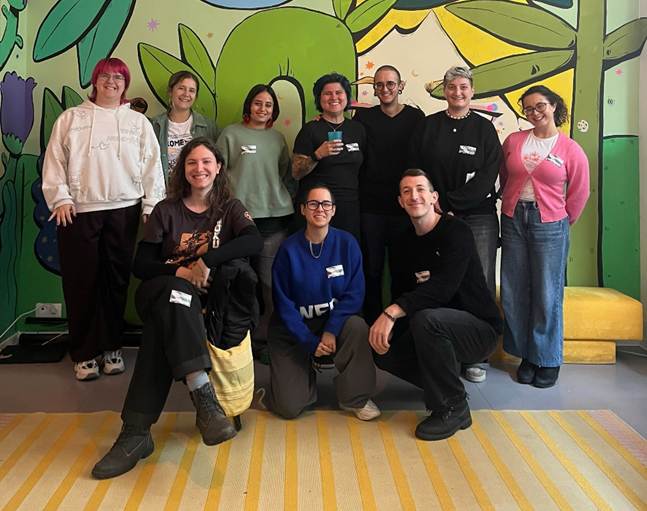
“Bulgaria must condemn anti-LGBTI hate speech, properly record and investigate hate crimes, introduce accessible legal gender recognition, and recognise same-sex couples and their families. Above all, LGBTI people must be able to live openly and safely, with equal treatment in schools, workplaces, healthcare and public life,” adds Adi Petrov.
Funding gender equality remains the most strategic action philanthropy can take to break through the current anti-rights and anti-democratic backlash – especially because the activists and communities doing this work do so against all odds, under real threat to their safety, and with too few resources.
The road ahead is long and steep. But this case shows exactly what is possible when grassroots organisations have the freedom, safety, time, and resources to work together towards lasting, systemic change.
“Everyone should be able to live openly and safely as themselves, with their identity, dignity and bodily autonomy fully respected. The future we are working towards is one in which trans and intersex people can study, work, create families and participate equally in society, wherever they call home,” concludes adds Adi Petrov.