This article was written by Rebecca Amsellem, a French-Canadian feminist activist, creator of Les Glorieuses, a newsletter reaching more than 150,000 subscribers, and founder of Gloria Media, a newsletter production company proudly supported by the Alliance for Gender Equality in Europe with an Emergency grant. As gender equality gains made over recent decades are increasingly under pressure – from shrinking funding, disinformation, and broader democratic erosion – Rebecca reflects on what is lost for gender equality and the public good when funding for ‘feminist journalism’ disappears.
The final investigation
Last month, the CNN As Equals programme published its final investigation before shutting down. Titled ‘Exposing an Online ‘Rape Academy,’ its findings are as chilling as the title suggests.
After months of undercover work, CNN As Equals journalists infiltrated private Telegram groups where men from around the world were exchanging tips on how to drug their wives or partners without their knowledge, film them unconscious, and evade detection. They shared techniques as casually as sharing recipes or parenting advice.
One man live-streamed the assault of his sleeping wife for $20 per viewer, payable in cryptocurrency. Another man, based in a Spanish enclave, sold bottles of odourless, colourless “sleeping liquid” for €150, delivered anywhere in the world. The investigation also uncovered a mainstream pornographic platform hosting over 20,000 so-called “sleep” videos, viewed hundreds of thousands of times, with virtually no accountability.
The journalists collected testimonies from survivors: women in England and Italy whose husbands had systematically drugged and raped them for years. Women who woke up with bruises, only to have their partners tell them they were imagining things when they asked questions. Women who went to the police and were asked if they were “faking it.” Women who carry the trauma of assaults designed to leave no memory, only a void, and a slow, devastating realisation.
As a direct result of the investigation, the Telegram group was shut down. And in early April, Polish authorities arrested a man identified by reporters: someone who had openly described in these exchanges how he drugged and raped his wife, and whose address the CNN as Equals team had tracked down. He confessed. He faces up to twenty years in prison.
How many women have been protected from violence because this investigation exists? How many men have refrained from ordering that bottle? How many survivors have finally found the words to name what they experienced, or felt believed for the first time? More than one, for sure.
Journalism that protects women
That’s what feminist journalism is. It’s journalism that protects women. It’s a journalist who delves into the darkest corners of the internet, puts a name to systemic violence, and establishes accountability where anonymity reigned. It’s journalism that saves women.
As I mentioned in the introduction: Exposing an online “rape academy” was CNN As Equals’ final investigation. The very last. The program, which had been running since 2019 and had produced some of the most important gender reporting of the decade, lost its funding at the end of December 2025. The private foundation had awarded a $3.6 million grant to run the program, covering salaries, production, reporting, and the engagement of freelance journalists worldwide. When that grant ended, CNN As Equals shut down.
What happens when funding stops
I must be transparent here: the same foundation also ended its funding for Impact, the feminist journalism newsletter we produced until recently, which directly led to its closure.
When funding stops, ongoing investigations are abandoned. Sources who had trusted a publication, sometimes at their own risk, are left without someone to speak to. The journalists who had spent years building expertise, weaving networks of contacts, and learning the legal and political landscape in dozens of countries drift away. This institutional knowledge is not transferred. It disappears. The next investigation that would have exposed the next network, protected the next group of women, brought the next predator to justice, but it simply doesn’t happen. The silence that follows is not neutral.
What does the end of funding mean for feminist journalism in general? It means that an already underfunded field loses another lifeline. It means that the journalists who remain must do more with less, take greater personal risks without institutional support, and compete for an ever-shrinking pool of grants, most of which have short deadlines, narrow scopes, and no guarantee of renewal. It means that the funding organisations that continue to provide financing have more power, even as they give less. It is a balance of power that tips even further in favour of these donors.
Before going any further, I want to pay tribute to someone who understood all of this deeply, and who did something extraordinary with the resources she had. Megan Clement was the editor-in-chief of Impact, and she was an exceptional one. Under her leadership, the Impact newsletter produced rigorous feminist journalism, centring the voices of women most affected by inequality, particularly in the Global South, with the editorial seriousness the subject deserves. Working alongside Megan showed me what it looks like when talent, conviction, and commitment converge.
What now?
We make the case – loud and clear, again and again, to anyone who will listen – that feminist journalism is not a niche interest to be funded on the sidelines of a philanthropic portfolio. It is public infrastructure.
CNN’s As Equals investigation didn’t just inform its readers. It led to an arrest. It gave survivors a framework for understanding what they had experienced, and named a form of violence that, in many countries, still lacks a specific legal category.
This type of journalism requires time, security, editorial expertise, and sustained investment. This is what we are trying to continue doing with Les Glorieuses and The Glorious Letter. The question for funders – foundations, donor collaboratives, individual donors – is whether they are prepared to treat feminist journalism as the essential and life-saving work that it is, in a demonstrable way. CNN’s latest investigation, As Equals, has showed that it is, again.
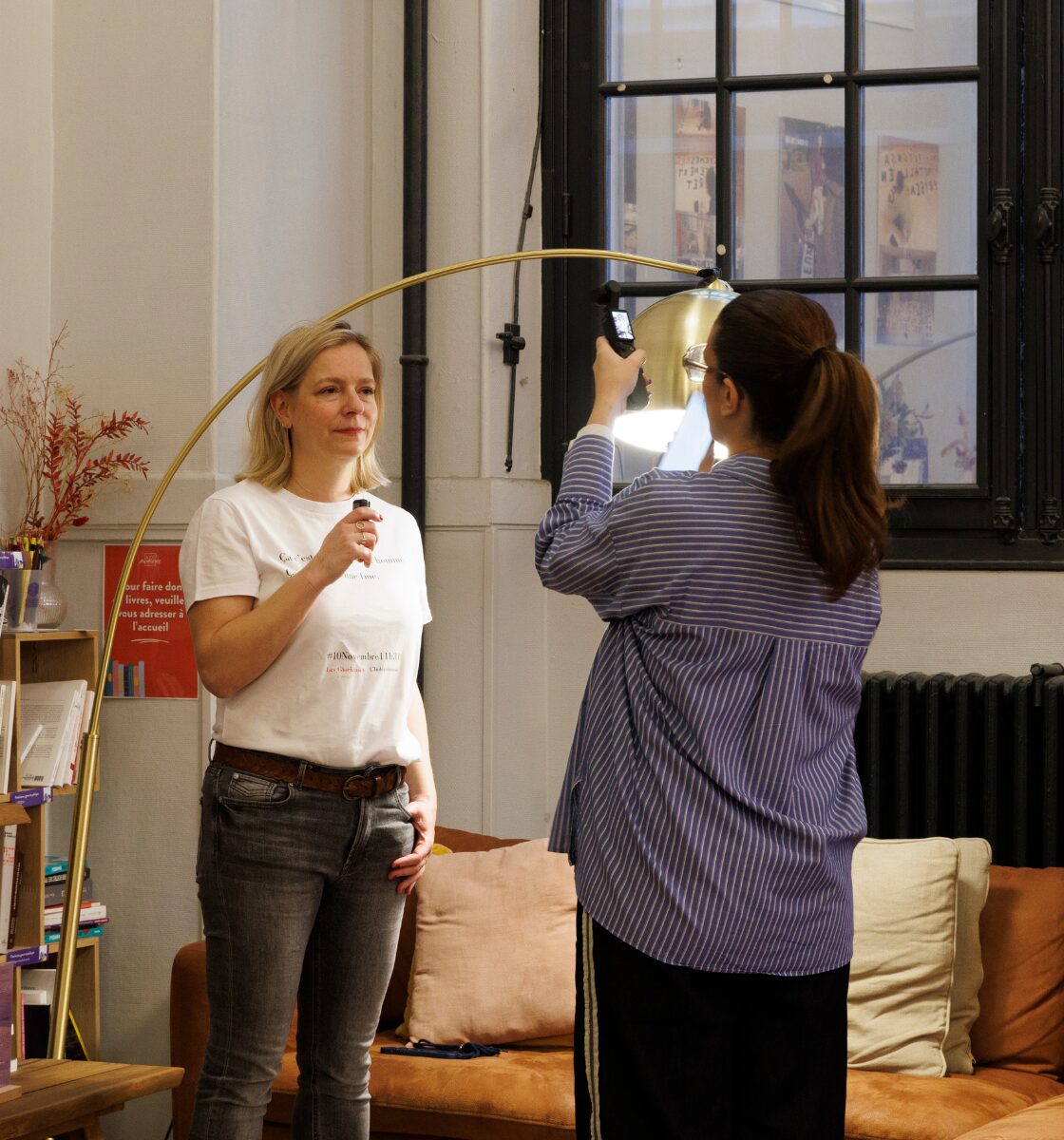
Cover photo by Gloria Media.