Movements for gender equality are building, organising and transforming power across Europe, often with minimal resources and against significant odds. A new report by the Alliance for Gender Equality in Europe maps this work for the first time, and makes a clear case for why it must be better resourced.
Drawing on 30 in-depth interviews with organisers, funders, and researchers, the report captures how movements are advancing equality, democracy, and human rights – and exactly what kind of resourcing would enable them to thrive and create positive, lasting change.
What the research found
Across Europe, movements for gender equality are inherently diverse. There is no single ‘women’s rights movement’ with one strategy or structure. Instead, organising is plural and contextual. From Spain’s Territorio Doméstico, where migrant care workers organised to secure labour rights, to France where diverse feminist movements joined forces to add consent to the country’s rape law, to the pan-European My Voice, My Choice campaign that united over 300 organisations and 1.2 million citizens to demand reproductive rights across the EU.
The research confirmed that movements are not centralised machines but ecosystems that are constantly evolving. A critical part of any movement is that it is in motion and does not begin or end with a campaign or a grant cycle. Meaningful change often begins in small, interconnected efforts that can grow into broader transformation.
These groups are not filling service gaps or delivering charity but advancing systemic change through interconnected practices of:
- Building power: At the centre of movement building is the nurturing of individual and collective capacity to imagine and act for change through healing, reflection, and leadership development.
- Organising power: Movements gain momentum by connecting the individual to the collective and channelling shared purpose into wider action. Examples from interviews include building coalitions, convening transnationally, and developing joint strategies.
- Transforming power: This is the process by which movements dismantle harmful systems and build new ones. It is about changing structural and cultural conditions that uphold inequality. Examples include narrative change, strategic advocacy, and institutional transformation.
But the scale of the challenge cannot be underestimated. Movements face a well-organised and well-resourced backlash, funding cuts, shrinking civic space, and democratic rollback. The anti-gender movement has billions in funding and a coordinated playbook. On the other hand, the gender equality ecosystem continues to organise with a fraction of those resources and often under threat. Each gain in legal protection is often followed by organised pushback, requiring movements to sustain pressure, build new alliances, and adapt their strategies over years or even decades.
What this means for philanthropy
The research found that current funding models not only fail to support movement-building, they often actively undermine it. Respondents stressed that movements cannot thrive on short-term project funding alone. They need stable infrastructure, staff capacity, and time to plan strategically. Organisers also argued that the form of funding matters as much as the amount.
The report outlines concrete recommendations for the philanthropic field, structured around three dimensions of movement-building:
- Building power: The gender equality ecosystem needs funders who can accompany organisations and movements through uncertainty, offer long-term flexible support, simplify and streamline the paperwork, and value relationships and trust as much as results. This is what allows civil society to grow roots, plan, pivot, and seize opportunities for change.
- Organising power: Almost all interviewees highlighted the value of investing in relationships, infrastructure, and collaborative spaces. Grassroots activists need to discover, connect, and collaborate across geographies and languages. It’s not just about funding meetings, but about gatherings that enable trust and collective strategising, which is rarely possible within traditional project cycles.
- Transforming power: This means changing not only what and who is funded but also how philanthropy itself operates. Interviewees emphasised that funders must model the same values – trust, participation, transparency, and accountability – that they seek to promote. This transformation requires funders to look inward, share decision-making power, and see learning as integral to impact.
Philanthropy has the opportunity – and responsibility – to move beyond the transactional logic of projects toward the transformational work of cultivating ecosystems.
Don’t miss our upcoming webinar: Strategies for Countering Pushback and Building Movements in Europe
You can also register for our upcoming webinar, which will take place on 26 May, where movement-builders will share strategies, stories, and lessons from the field. This webinar will include breakout conversations to reflect on the stories heard, connect with peers, and generate ideas for action. These conversations should allow participants to exchange and support each other.
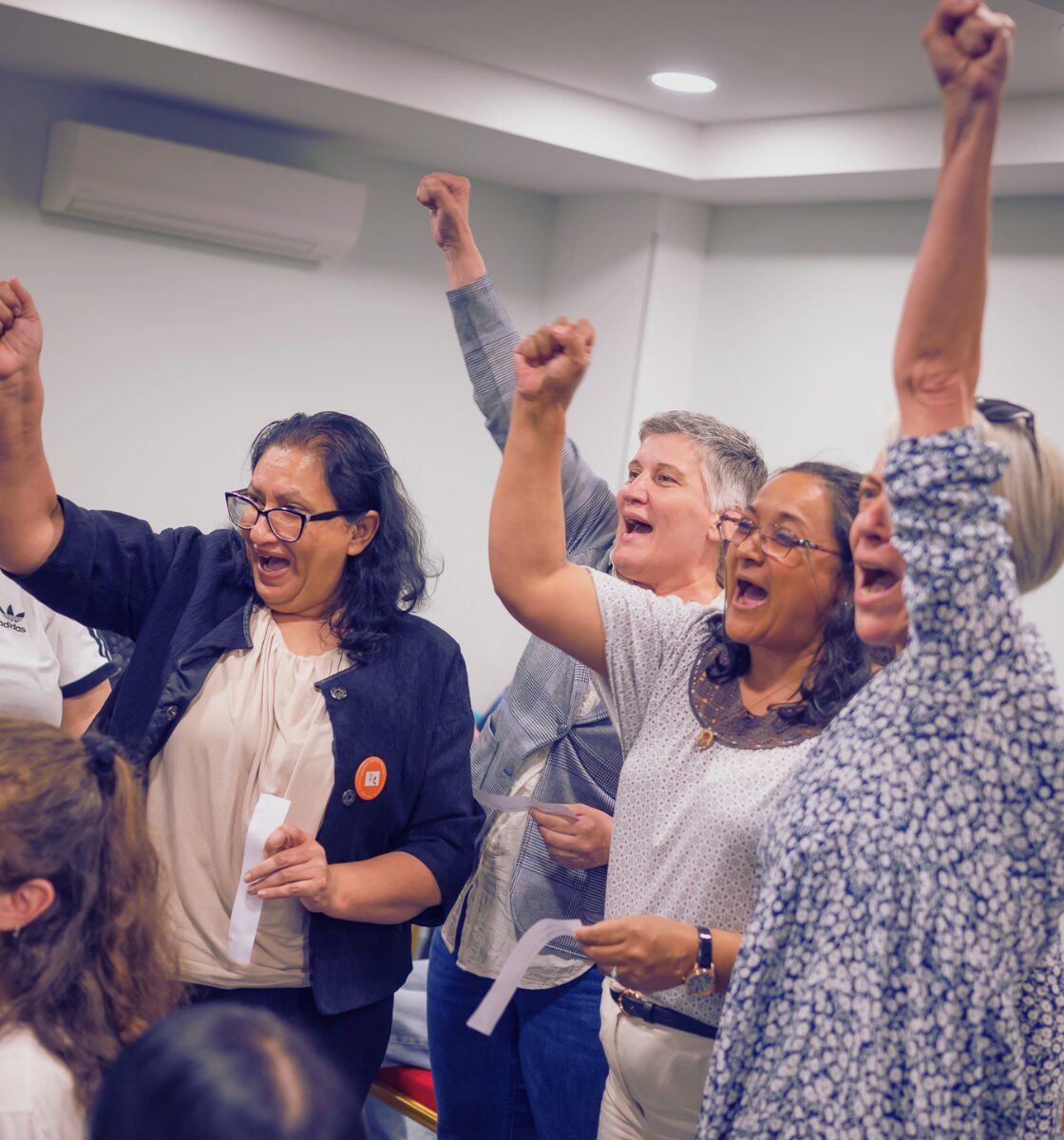
Cover photo by the Ecumenical Women’s Initiative.