This article is written by Joanna Maycock, one of the co-authors of ‘Resourcing Movements for Gender Equality in Europe’ report. The report is the first-ever mapping of grassroot movements and coalitions in Europe to inform future philanthropic support, which was commissioned by the Alliance for Gender Equality in Europe.
I’ve spent decades working in and alongside women’s organisations, grassroots feminist movements, and community spaces across Europe. From policy rooms in Brussels to women’s circles held quietly in community halls I’ve seen that the work creating the real change in people, communities, and systems rarely fits into conventional funding frameworks.
I mean the slow and often invisible labour of relationship-building, healing, political education, care, and collective leadership. The work that allows movements not only to resist, but to endure and evolve.
I’ve seen women’s circles holding grief, healing, and political awakening without any funding whatsoever. Grassroots organising is often sustained through unpaid work, exhaustion, and personal sacrifice. One organiser described feminist movements as “doing the connective tissue work that democracies depend on, while constantly fighting for survival themselves.”
Alongside this come the conditions that can accompany funding, Sometimes these are explicit, but more often they are subtle but deeply felt. There is a sense that movements are being shaped by what funders considered fundable: be more strategic, be more “measurable”, achieve impact at scale quickly.
Over time, these pressures influence not only what movements do, but what becomes visible, sustainable, and possible.
What makes a difference
There are also funders who move differently. People and institutions who genuinely listen. Who understand that movements are living ecosystems rather than delivery mechanisms for short-term outcomes. Who recognise that trust, flexibility, and relationships are not secondary to impact, but central to it.
Sometimes the shift comes through something that appears modest on paper like a €10,000 grant covering interpretation, childcare, or travel for women who would otherwise not be in the room. These investments change who gets to belong, whose experience shapes the conversation, and what becomes possible. They remind us that resourcing can itself become part of feminist practice when it is relational, thoughtful, and rooted in trust.
What this research makes visible
The Alliance’s report, which I co-authored with Laura Sullivan and Giulia Barnhisel, gathers insights from organisers, activists, and movement actors across Europe. Again and again, we encountered immense strategic intelligence, creativity, courage, humour, and active hope.
The research makes visible an ecosystem that is alive, adaptive, and deeply interconnected, built over decades of energy and invisible work. In Spain, migrant domestic workers organised through Territorio Doméstico to fight for labour protections and recognition of care work. Across Europe, the My Voice, My Choice campaign brought together more than 300 organisations and mobilised 1.2 million citizens in support of reproductive freedom. In Serbia, feminist organisers reframed political corruption as an issue of care, accountability, and gender justice.
Their strength comes not from a single strategy or structure, but from relationships, shared analysis, and the ability to connect issues that are often treated separately. All of this is unfolding within increasingly difficult conditions: shrinking civic space, rising authoritarianism, and a coordinated anti-gender backlash backed by significant resources.
Living with misalignment
One of the clearest findings was that many current funding models remain poorly aligned with how movements actually function. Interviewees spoke about the burden of short-term project cycles and pressure to produce immediate measurable outcomes in contexts where social change is slow and unpredictable.
As one participant put it, movements are frequently expected “to respond to crisis after crisis without the long-term support needed to build durable power.” Project logic often struggles to support relationship-building work, strategy that seize emerging opportunities, and the complexity of cultural change, which affects what gets prioritised, what gets delayed, and what quietly disappears.
What movements keep asking for
Across the research, similar themes emerged across most interviews. Movements are asking for:
Resources that match the rhythm of the work. Organising does not begin with a grant and end when it closes. Multi-year, unrestricted funding allows movements to plan with confidence and experiment to see what actually works rather than contorting themselves to fit a funding cycle.
Sustained support and presence, especially when things get hard. Feminist movements often operate in conditions of backlash and polarisation. What they need from funders is more than money. They need funders who are willing to stay involved and provide resources precisely when the political terrain becomes most hostile.
Investment in the whole ecosystem. Movements are webs of actors — grassroots collectives, frontline responders, care spaces, legal defenders, media makers, researchers, storytellers, coalition builders, each playing a distinct and necessary role. Resourcing the ecosystem rather than a single “type” of organisation expands what becomes possible, and donor collaboratives offer a powerful way for foundations to extend their collective reach.
Time and space to connect. Fragmentation is one of the most consistent challenges movements named in our interviews. What they ask for are more opportunities to discover one another, build trust across differences, and weave the connections that make collective action genuinely possible.
A different relationship with power. Interviewees repeatedly stressed the importance of funders who embody the values they seek to support, not just in their grant-making, but also in how they listen, make decisions, and hold themselves accountable. The invitation is for philanthropy to turn its gaze inward: to reflect on its own structures and practices, and to be willing to change.
Where this leaves us
Feminist movements across Europe continue to organise, connect, and imagine under immense pressure, building forms of resilience and solidarity that are often difficult to measure but deeply felt in communities, cultures, and political life.
The Alliance has already begun creating spaces where different kinds of relationships and conversations can emerge. This report offers an opportunity to build on that work, to keep listening closely, stay connected to the realities of movement work even when they are messy, and to resource the ecosystems and relationships that allow movements not just to survive, but to grow.
Because resourcing shapes what survives, what thrives, and what becomes possible.
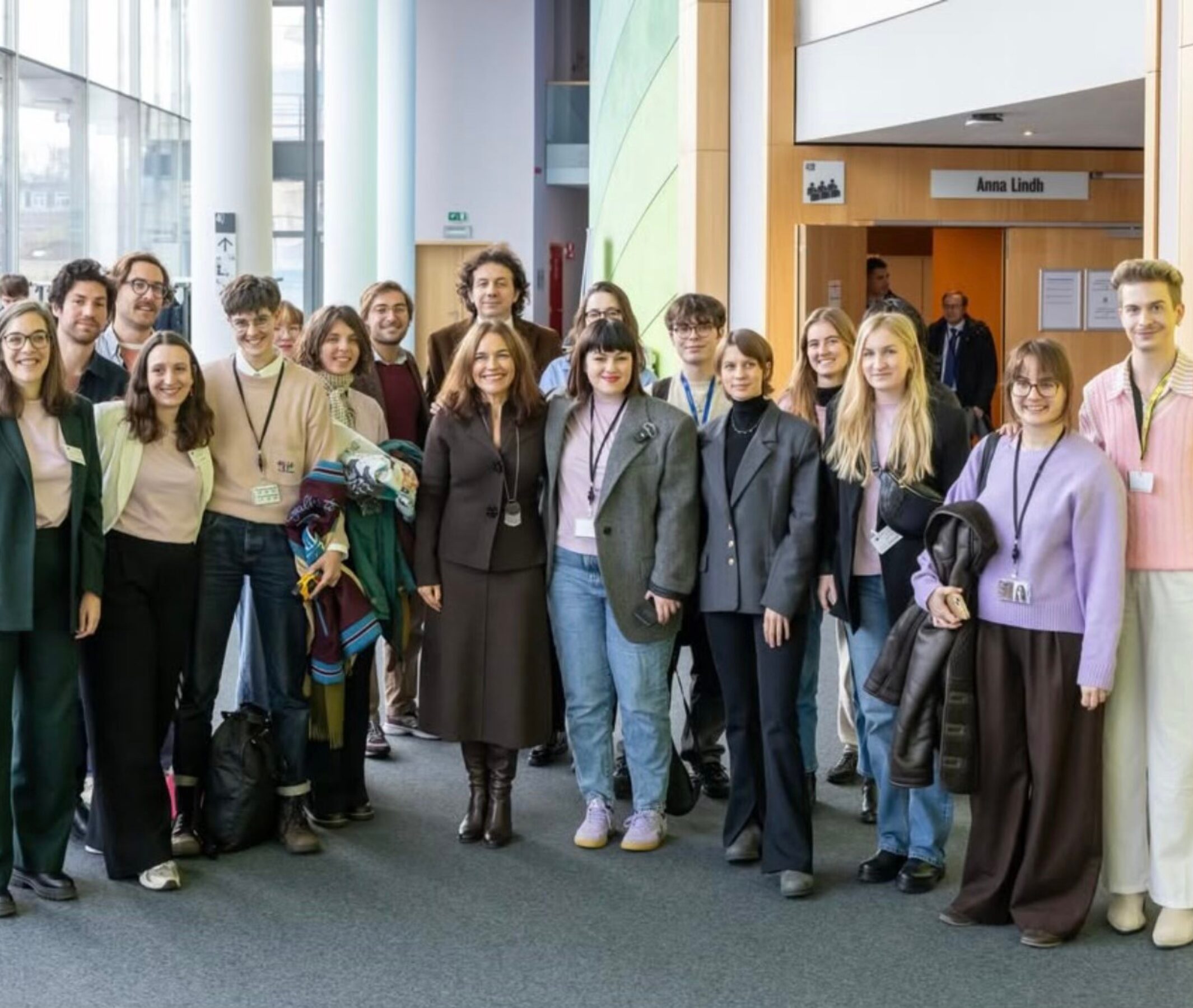
Photo by My Voice, My Choice